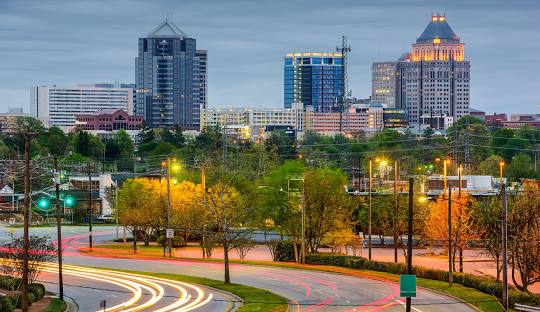
Nestled in the heart of Georgia’s Lake Country, Greensboro is a city with a rich tapestry of history that dates back over two centuries. Established in 1786, Greensboro was named after General Nathanael Greene, a Revolutionary War hero. The city has played a significant role in Georgia’s history, from its early days of settlement through the Civil War, and into the modern era, evolving from a small frontier town into a vibrant community.
The area now known as Greensboro was originally inhabited by Creek and Cherokee tribes. European settlers began arriving in the mid-18th century, drawn by the fertile land and strategic location. Greensboro was officially founded in 1786, shortly after the American Revolution, and was named in honor of General Nathanael Greene, who was instrumental in the Southern campaign of the war. The town quickly became a hub for agriculture and commerce, with cotton being the primary crop.
Throughout the 19th century, Greensboro grew steadily. The advent of the cotton gin in the late 18th century had a profound impact on the region, transforming it into a major cotton-producing area. The city became a key trading center, with its economy heavily reliant on cotton and the labor of enslaved African Americans.
The Civil War brought significant upheaval to Greensboro. Georgia, a Confederate state, saw many of its towns and cities ravaged by war. Greensboro was no exception. In 1864, General William T. Sherman’s infamous “March to the Sea” passed through Georgia, causing widespread destruction. However, Greensboro escaped major damage, allowing it to recover more swiftly than many other Southern towns. The end of the Civil War and the abolition of slavery forced Greensboro to adapt to a new economic reality, leading to a slow but steady recovery during the Reconstruction era.
The post-war Reconstruction era was a challenging time for Greensboro, as it was for much of the South. The abolition of slavery had disrupted the labor system that the agricultural economy relied upon. Despite these challenges, Greensboro gradually rebuilt its economy. The late 19th and early 20th centuries saw the diversification of Greensboro’s economy with the introduction of textile mills and other industries, providing new employment opportunities and stimulating growth.
Education played a crucial role in Greensboro’s development during this period. The establishment of schools and colleges, such as the Georgia Normal and Industrial College, helped to educate the local population and attract new residents to the area. The city’s infrastructure also improved with the arrival of the railroad, which enhanced Greensboro’s connectivity and facilitated trade and travel. Learn more Greensboro.
The mid-20th century brought further changes to Greensboro. The civil rights movement of the 1950s and 1960s had a profound impact on the city. As in many Southern towns, Greensboro experienced social and political upheaval as African Americans fought for equal rights and an end to segregation. The movement led to significant social changes and laid the groundwork for a more inclusive community.
In recent decades, Greensboro has embraced its historical heritage while also looking to the future. The city’s charming downtown area, with its well-preserved antebellum homes and buildings, attracts tourists from across the country. Lake Oconee, created by Georgia Power in the 1970s, has become a major recreational destination, boosting the local economy and transforming Greensboro into a popular spot for fishing, boating, and golfing.
Economic development in the late 20th and early 21st centuries has been driven by a combination of tourism, real estate, and the service sector. The construction of luxury resorts and residential communities around Lake Oconee has attracted a new wave of residents and visitors, contributing to Greensboro’s growth and diversification.
Greensboro, Georgia, with its rich history and resilient spirit, stands as a testament to the enduring legacy of the American South. From its founding in the aftermath of the Revolutionary War to its role in the Civil War and its resurgence in the modern era, Greensboro has continually adapted and thrived. Today, it is a vibrant community that honors its past while embracing the opportunities of the future. The city’s historical charm, coupled with its natural beauty and economic vitality, ensures that Greensboro will continue to be a cherished destination for generations to come.
Greensboro, GA, founded in 1786, is historically significant for its association with General Nathanael Greene, a Revolutionary War hero. It played a vital role in Georgia's agricultural economy, particularly in cotton production. The city also witnessed important events during the Civil War and the Civil Rights Movement, making it a notable location in Southern history.
Greensboro boasts several key attractions, including its historic downtown area with antebellum architecture, and Lake Oconee, a popular destination for outdoor activities like fishing, boating, and golfing. The area also features luxury resorts, historic sites, and cultural landmarks such as the Old Gaol, one of the oldest penal structures in Georgia.
Initially an agricultural hub focusing on cotton, Greensboro's economy faced challenges post-Civil War but diversified over time. The introduction of textile mills and improved infrastructure helped recovery. In recent decades, tourism and real estate, particularly around Lake Oconee, have driven economic growth, transforming Greensboro into a popular destination with a robust service sector.
During the Civil War, Greensboro, GA, was part of the Confederate state of Georgia. It experienced the impacts of General Sherman’s “March to the Sea” but escaped major destruction. The war significantly affected its economy, which relied on enslaved labor, leading to a slow recovery during the Reconstruction era.
Lake Oconee offers a wide range of recreational activities, making it a major attraction near Greensboro. Visitors can enjoy fishing, boating, swimming, and water sports. The lake is also surrounded by several golf courses, luxury resorts, and residential communities, providing opportunities for golfing, hiking, and enjoying the scenic natural beauty of the area.
Quick Links
Opening Hours
@2026 Al's Outdoor Needs | All Rights Reserved
