

Oak wilt infection is common in trees in Greensboro, Georgia. This fungus moves fast, so many people think drought caused the problem. White oak and bur oak varieties can also become sick from this disease.
The disease spreads through root systems and affects nearby healthy trees. That’s why you need to identify the signs early.
Look for leaves that wilt and turn brown starting from the top. Early leaf drop is also a common sign. You can treat it by moving infected trees or getting professional help.
The management of oak wilt works best when you catch it early. Wait too long and you’ll lose the entire oak tree.
This guide covers everything Greensboro homeowners need to know. We’ll explain how transmission happens between oak species. You’ll learn treatment options and when to inject trees. We’ll also share preventative treatment of trees that keeps infected tree problems away.
What Is Oak Wilt?
Oak wilt is a fungal disease caused by Bretziella fagacearum. The fungus clogs the tree’s vascular system and blocks water movement. As a result, it kills trees fast and causes severe damage.
Red oaks and pin oaks die fastest from this infection. Live oaks and white oaks can also get sick but survive longer.
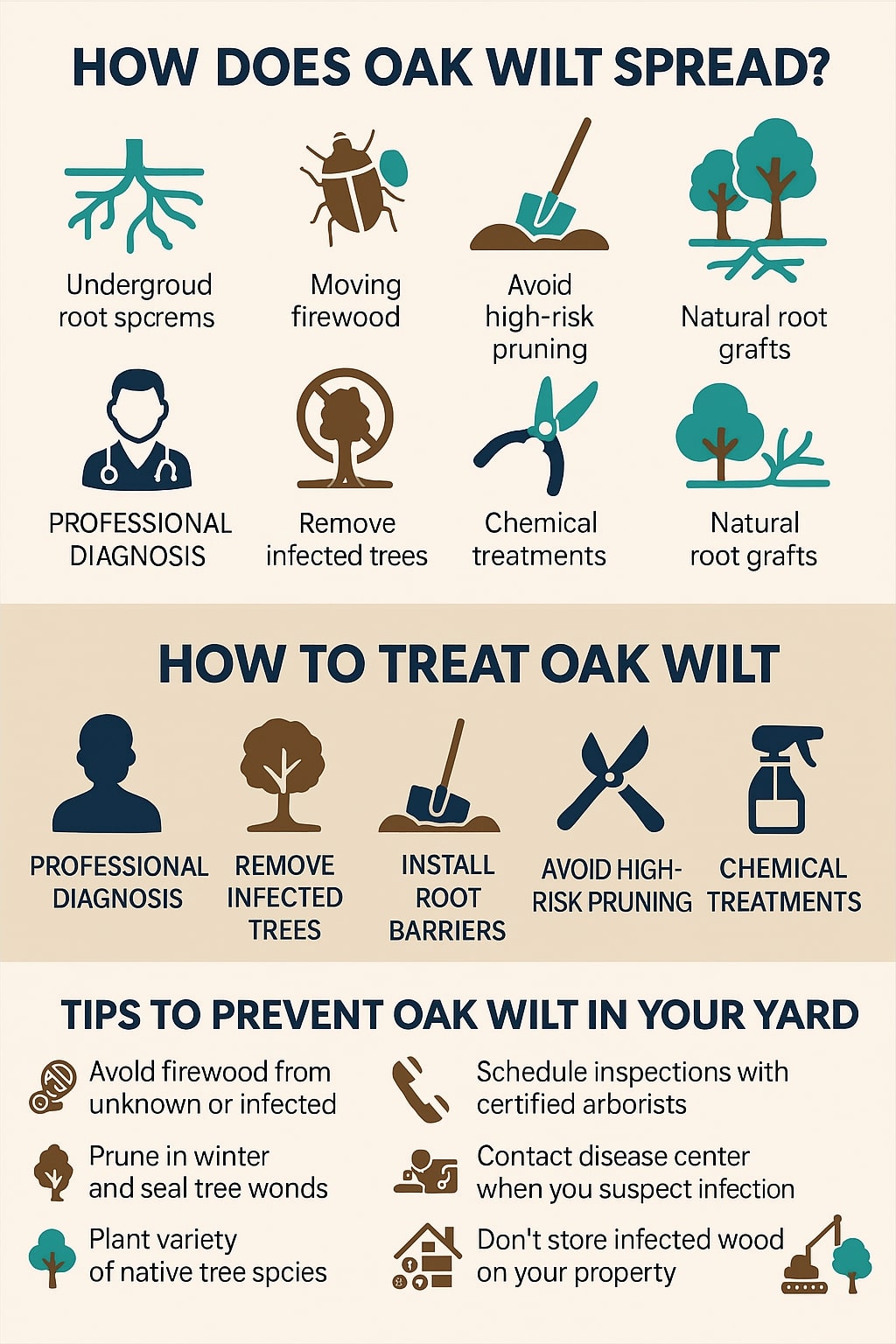
How Does Oak Wilt Spread?
- Through root system connections between nearby trees underground.
- Beetle activity carries spores from infected red oak to healthy tree wounds.
- Moving firewood or logs from sick trees to new locations.
- Insect spread happens when bugs visit both infected and healthy trees.
- Construction damage that connects root systems speeds up the spread of the disease.
- Poor pruning practices during warm months increase infection risk.
- Natural root grafts that spread oak wilt between neighboring oak tree specimens.
Key Signs of Oak Wilt in Greensboro Trees
As the disease spreads, it gives you various warning signs. Noticing them sooner can save your trees and prevent the infection from spreading.
Mid to Late Summer Leaf Discoloration
The color change starts at leaf tips and moves inward. Oak leaves change from bright green to dull bronze or brown. This happens during summer heat when healthy oaks should look their best. Red oaks show this sign first among different species of oak. This early warning can save the life of the tree with quick action.
Wilting or Curling Leaves Still Attached to Branches
Normal autumn leaves fall off, but infected leaves stay attached. Symptoms of oak wilt include curled leaves that won’t drop naturally. These leaves look dried out but remain stuck to branches. The symptomatic tree keeps dead foliage while nearby healthy oaks drop leaves normally. This sign appears in mid to late summer months.
Rapid Decline in Red Oaks
Red oaks face the highest risk of oak wilt among all varieties. Tree death can happen in just 4-6 weeks after symptoms start. The entire canopy turns brown quickly during warm weather months. Areas where oak wilt is present show multiple red oak deaths. This rapid decline makes red oaks the most vulnerable.
Cracked Bark and Fungal Mats
Late-stage infections create visible fungal mat formations under loose bark. The bark splits open and releases a rich and sweet smell. They attract beetles that spread oak wilt to other trees. Only certain oak group members develop these distinctive fungal formations. This stage usually means the tree cannot be saved.
Early Leaf Drop or Dead Branches in Upper Canopy
Upper branches die first and drop leaves during summer months. The canopy shows dead sections while lower branches stay green. Root grafts between trees can cause similar patterns in nearby oaks. Large branches die suddenly rather than gradually declining over seasons. This pattern helps distinguish oak wilt from other tree problems.
How to Treat Oak Wilt
Quick action saves trees from this deadly disease. Early oak wilt management gives you the best chance to protect your property and neighborhood trees.
Get a Professional Diagnosis First
Lab testing confirms oak wilt and rules out similar problems. Drought stress and anthracnose can look just like oak wilt symptoms. Don’t guess about tree health when dead trees could spread the fungus to healthy ones. Let professional arborists assess the trees and collect samples for accurate results.
Remove Infected Trees Promptly and Safely
Work with certified arborists because they know how to handle infected wood without creating new spore problems. Tree removal permits might be required in some Greensboro neighborhoods. Proper disposal prevents beetles from spreading infection to other properties. Don’t let infected trees die from oak wilt and threaten nearby healthy specimens.
Install Root Barriers Between Trees
A trench between diseased and healthy oaks stops underground transmission. This process can sever root connections that spread the fungus naturally. Dig trenches 3-5 feet deep around root flares of healthy trees. Fill with soil to prevent insect access and root regrowth. This method helps manage oak wilt in areas with multiple oak trees.
Avoid High-Risk Pruning Seasons
Never prune oak trees between April and October in Georgia. Fresh wound sites attract beetles carrying deadly spores during warm months. If emergency pruning is needed, seal cuts with wound paint immediately. Winter pruning reduces infection risk when beetles are less active.
Consider Chemical Treatments for White Oaks
Fungicide injection treatments like propiconazole can protect uninfected white oaks. These treatments work best as prevention rather than cure. Professional arborists use specialized equipment for proper injection techniques. White oaks respond better to chemical protection than red oak varieties.
Tips to Prevent Oak Wilt in Your Yard
Smart care can prevent oak wilt from reaching your Greensboro property. These simple actions protect your trees and your neighbors’ yards too.
Prevention Tips:
- Avoid firewood from unknown or infected sources.
- Prune in winter and seal tree wounds.
- Plant variety of native tree species, not just oaks.
- Monitor oaks closely when symptoms are observed.
- Schedule inspections with certified arborists.
- Clean pruning tools between trees with alcohol.
- Contact disease center when you suspect infection.
- Don’t store infected wood on your property.
- Choose tree removal services following containment protocols.
Final Words
Oak wilt ranks among the most concerning tree diseases in Georgia. It is best not to wait if you notice the signs or think there is a problem. Quick diagnosis of oak wilt can save your entire yard.
Al’s Outdoor Needs provides expert tree health services throughout Greensboro. Our certified arborists offer reliable information on oak wilt and treatments. We have served the local community for years and know what treatment can keep your trees safe and thriving.
Call us today for professional inspection and peace of mind.
Frequently Asked Questions
Can oak wilt spread through pruning tools or equipment?
Yes, dirty tools can definitely spread this disease between trees. You need to wipe down your pruning equipment with rubbing alcohol after working on each tree. Tree experts know this risk and always clean their tools first.
When is the right time to treat oak wilt?
Detecting the problems early means less risk to the trees. Chemical treatments work best before you see symptoms or when they first show up. Don’t prune your oaks from April through October here in Georgia.
What is the best fungicide for oak wilt treatment?
Alamo or propiconazole injection is the most effective fungicide for oak wilt prevention. Expert arborists use specialized equipment for proper application. This treatment works better as prevention rather than as a cure for already infected trees.